DNS drift, caught the moment it propagates.
Lookup A, AAAA, CNAME, TXT, MX from six regions. Catch drift after a registrar change, accidental overwrites, or split-horizon misconfigurations.
When this monitor earns its keep.
Three concrete patterns. Use them as templates for your own setup.
Apex + www records
Your apex A record pointing at the load balancer. If a colleague accidentally edits it (or the wrong terraform run lands), production traffic stops within minutes.
SPF / DKIM / DMARC
TXT records that gate your outbound email reputation. A drift here = silently lower deliverability for weeks before you notice the support tickets.
MX records
Watch mail-exchange records to catch the moment a provider migration changes them, intentionally or not.
How the setup looks.
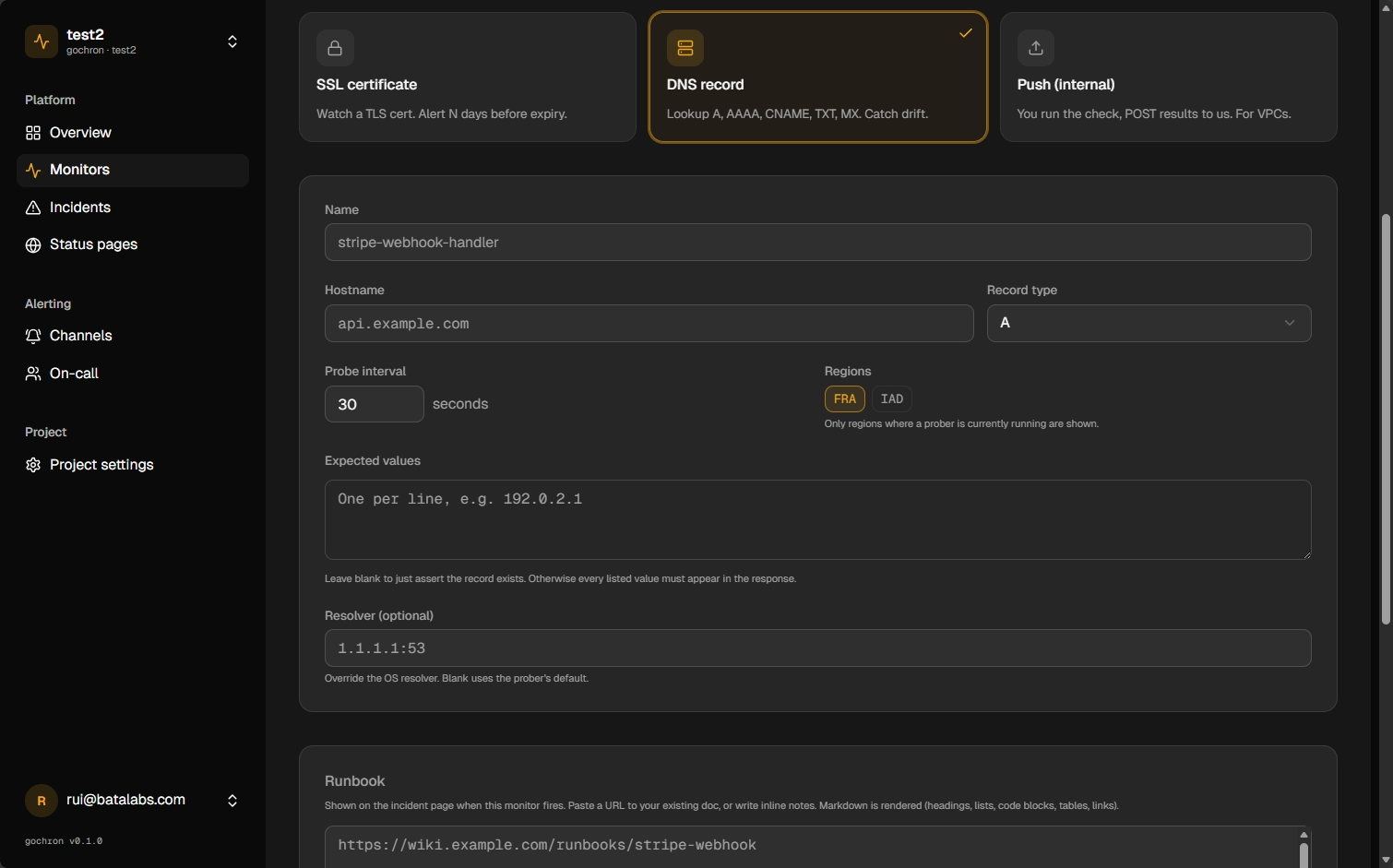
Choose record type and expected answers. We alert when resolution drifts. Flat rate per monitor regardless of how many record types you watch.
Same auth, same alert rules, same status pages as every other monitor type. See all 6
Pick record type and host
A, AAAA, CNAME, TXT, or MX. Optionally pin expected values or just assert the record exists.
Choose resolver if needed
Use a public resolver or your VPC DNS for split-horizon setups.
Alert with context
When values change, the incident shows expected vs observed so you can fix DNS fast.
FAQ
- Can I monitor SRV or CAA records?
- On the roadmap. Open an issue if you need them. Today: A, AAAA, CNAME, TXT, MX.
- Do you follow CNAME chains?
- Yes. Final resolved value is what we assert against. The chain itself is captured in probe history for debugging.
- How fast do you catch propagation after a change?
- On your monitor's probe interval (30s by default). The alert payload includes expected vs observed values from each region so you can see what propagated where.